What is Project-based Learning (PBL)?
In modern education, the passive acquisition of knowledge through textbooks and traditional lectures is gradually revealing many limitations. Instead, the global educational trend is shifting towards interactive models that help students achieve comprehensive breakthroughs in thinking and skills. Among these, the PBL method stands out.
The Outstanding Values of Project-based Learning (PBL)
The application of the PBL model brings about a strong transformation, helping students to be ready to meet the rigorous demands of the international education environment. This method offers 4 core benefits to create a "global citizen":
Developing Collaboration Skills: Teamwork is a key factor. Students learn how to divide tasks, respect differing opinions, and support each other to achieve common goals.
Enhancing Communication and Presentation Skills: Language becomes a sharp tool that helps students confidently present projects in front of an audience, debate points, and persuade listeners clearly.
Activating Creative and Logical Thinking: The process of brainstorming and planning trains students' ability to think innovatively, knowing how to analyze to find multiple solutions to problems.
Building Proactivity: Students become "masters" of their knowledge, taking responsibility for their progress and the quality of their products, thereby forming habits of self-learning and a high sense of responsibility.
So what is the essence of Project-based Learning?
To achieve the significant values mentioned above, the question arises: What is Project-based Learning?
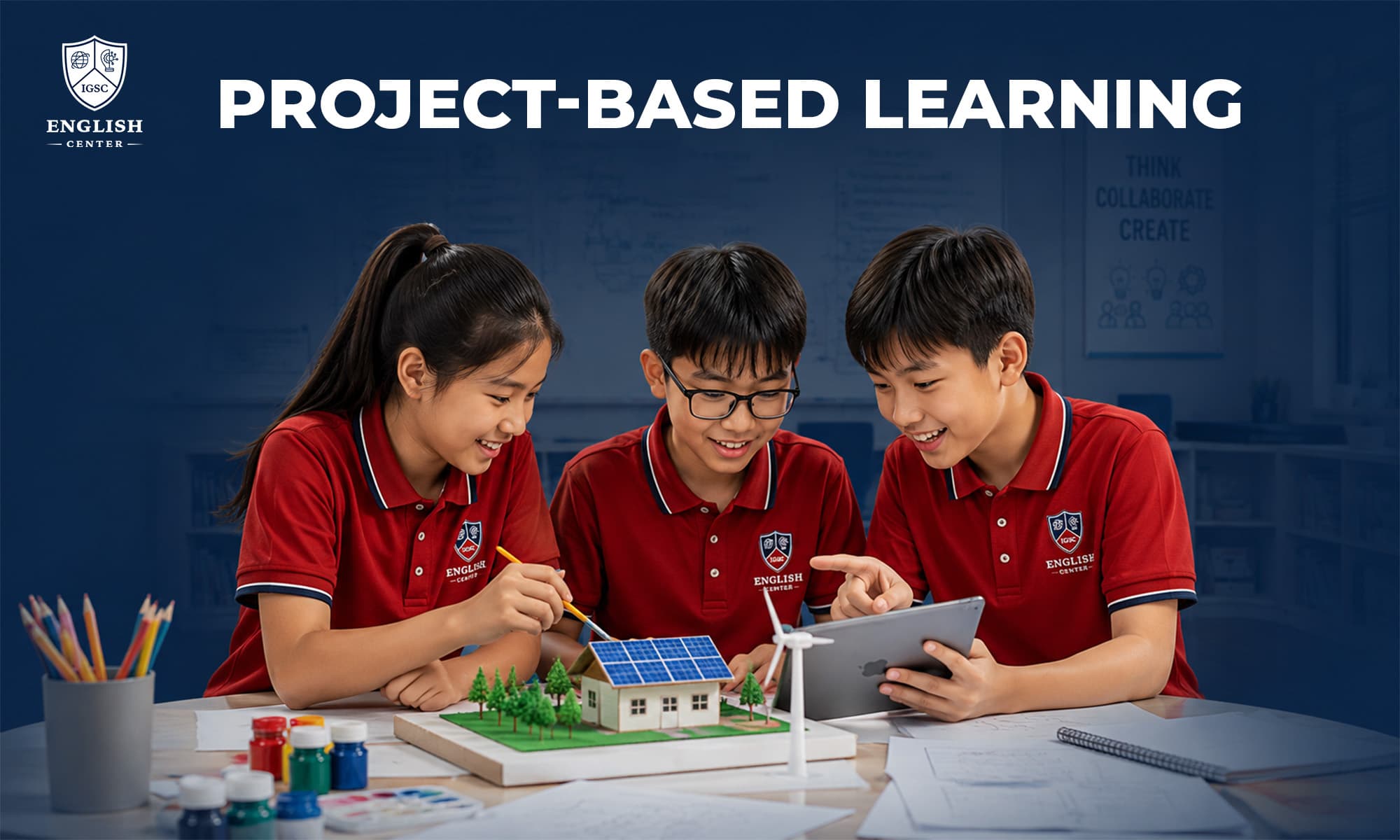
In a comprehensive understanding, this is an educational method that centers on problem-solving. Unlike rote learning to pass multiple-choice tests, PBL empowers students to directly engage in individual or group projects under the professional guidance of teachers.
Instead of merely memorizing theories on paper, students must undergo a deep research process, gather data, and ultimately create a tangible product (such as a science model, presentation, or community campaign). Through this, academic knowledge is flexibly applied to solve real-life situations.
With this advanced educational model, each lesson is no longer a theoretical pressure but has become an inspiring journey of knowledge exploration!